

I have, more than once, been asked if I’d consider leading a walking tour. I want to be clear that I have never once received this as a compliment.
People often ask how I manage to travel alone. I think they imagine I possess excellent instincts, extraordinary courage and possibly an internal compass that activates as soon as I cross a border. I usually give them a respectable answer about research and preparation because there is no need to damage my professional reputation voluntarily.
What I do not tell them is this.
The first time I got lost on purpose, or at least got lost and decided to call it purpose, I was in Vienna, twenty minutes from a hostel with a name I’d already forgotten. I asked a man outside a bakery for directions using four words of the local language(German) and a lot of hopeful pointing.
He pointed me back the way I came. I thanked him like he’d solved something. I had, in fact, already been exactly there, forty minutes earlier, and had simply failed to recognise my own footsteps.
(If you’re headed to Austria with a better sense of direction than mine, I did eventually pull myself together enough to write about the Christmas markets in Austria.)
That one felt almost charming. A rite of passage. A story you tell at a hostel bar, and everyone nods because it’s happened to them too, more or less, some version of it.
I would like to say it improved after that. It did not improve after that.
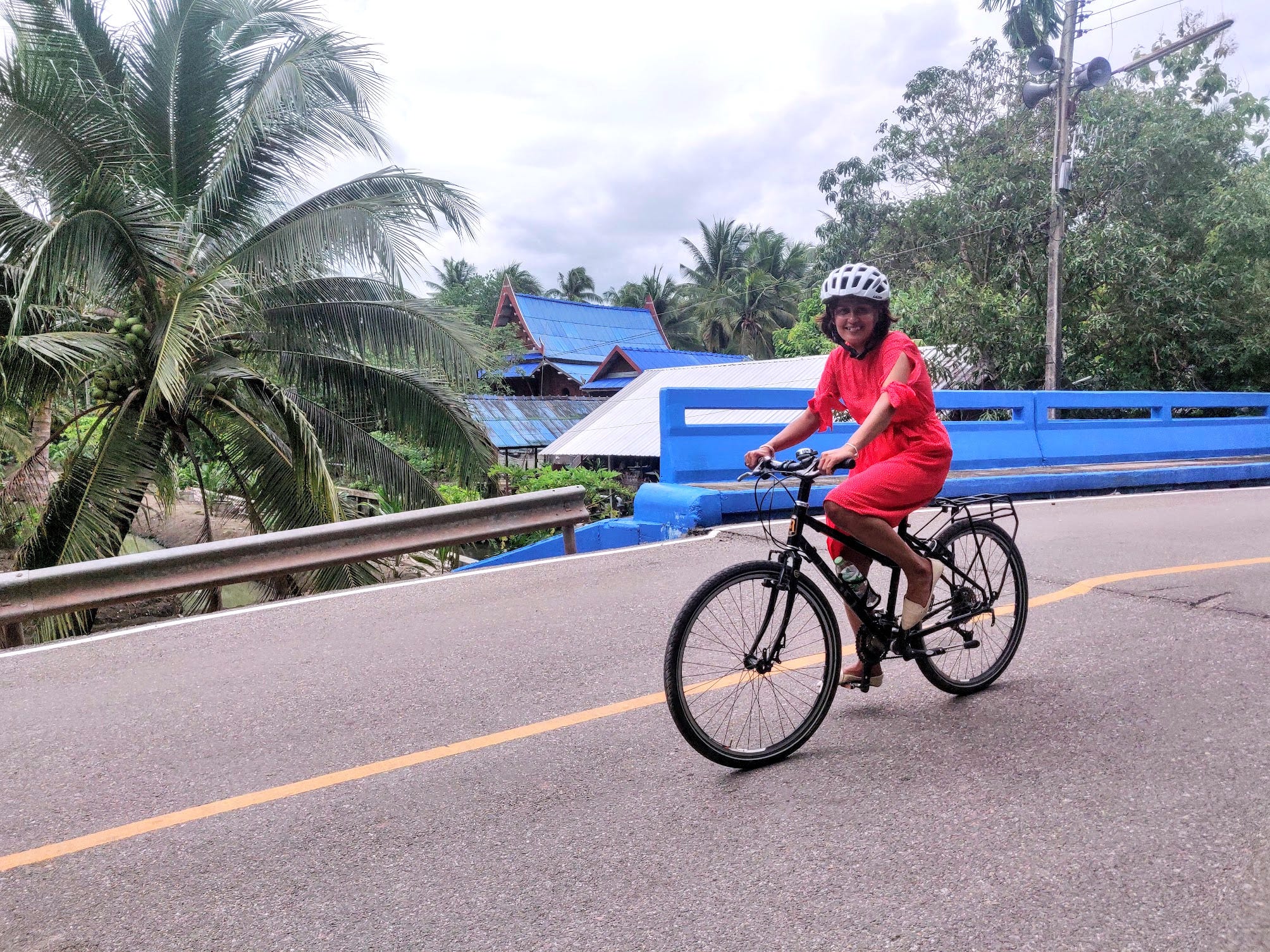
How a temple visit nearly became a missing persons case
None of my getting-lost stories is particularly serious in daylight, with time, phone battery, and somewhere nearby to buy tea. I can be annoyed, laugh at myself later, and add the accidental walk to the day’s step count, which gives it the appearance of a health decision.
It stops being funny when it is dark.
I spent nearly three weeks on a small island in Thailand because it checked every box I had in mind, small enough that I didn’t have to update my RAM with the nitty-gritties of a sprawling city, neon signs, beaming billboards, lane numbers, blocks, and other alphanumeric characters.
(Most of what I actually did there, minus the getting lost, made it into hidden gems in Thailand.)
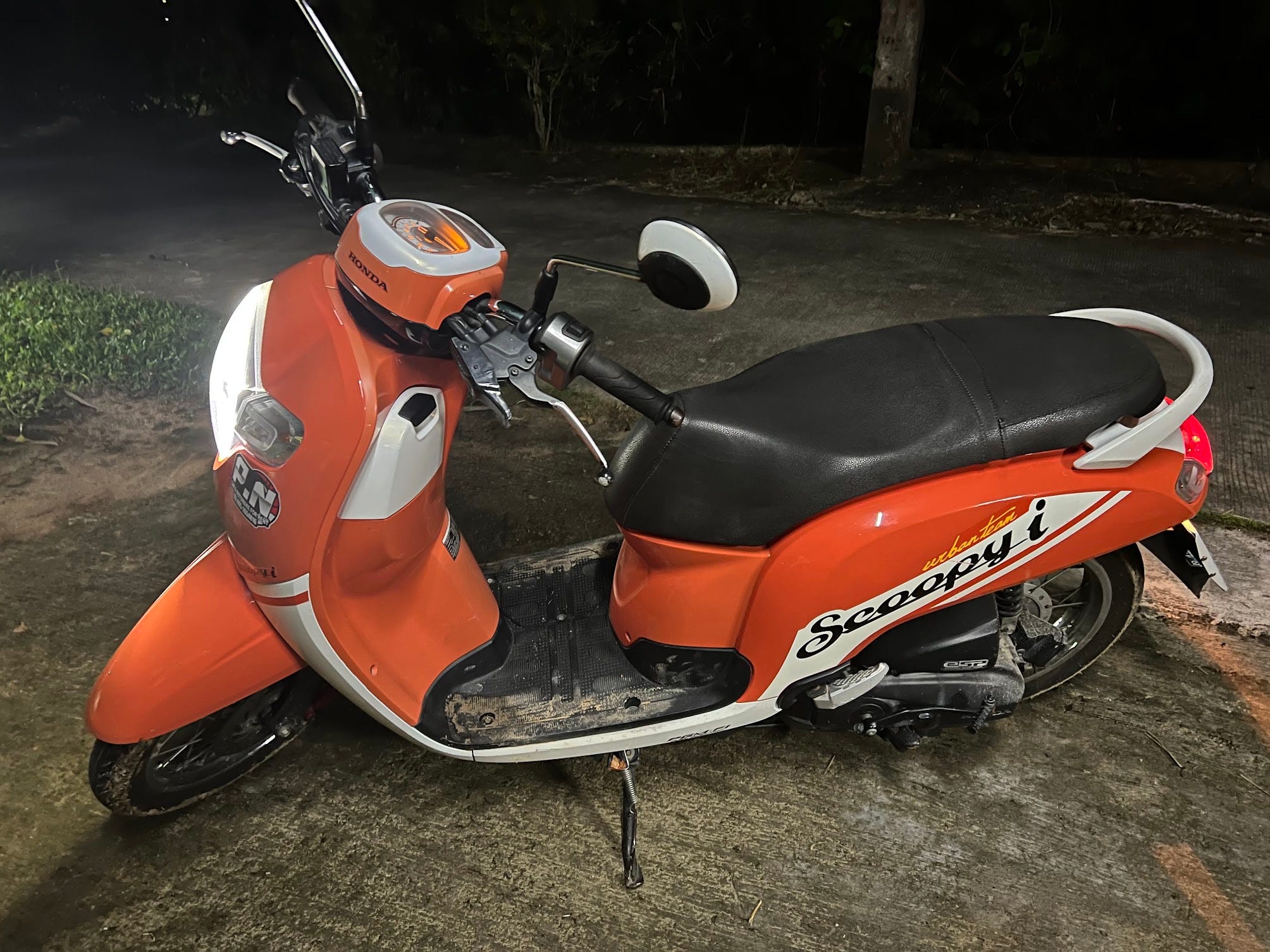
I’d rented a motorbike I’d grown fond of, partly because of the very low price I’d negotiated for it, and it performed well enough to feel like owning my horse on a lush island.
One afternoon I decided to drive to a hilltop Buddhist temple, 45 minutes away on the map, route clearly marked. What could go wrong? I started late, after work, food, and quiet time by the pool, since the afternoon sun looked like it did not know what mercy was.
The ride up was fantastic, the temple ancient, calm, and satisfying. By the time I’d explored it, the weather had other plans, sunny to misty to pouring; not even rainy season, the whole bird’s-eye view I’d just been enjoying curtained by cloud so fast it felt personal, as if the weather gods had realised I’d had too much fun.
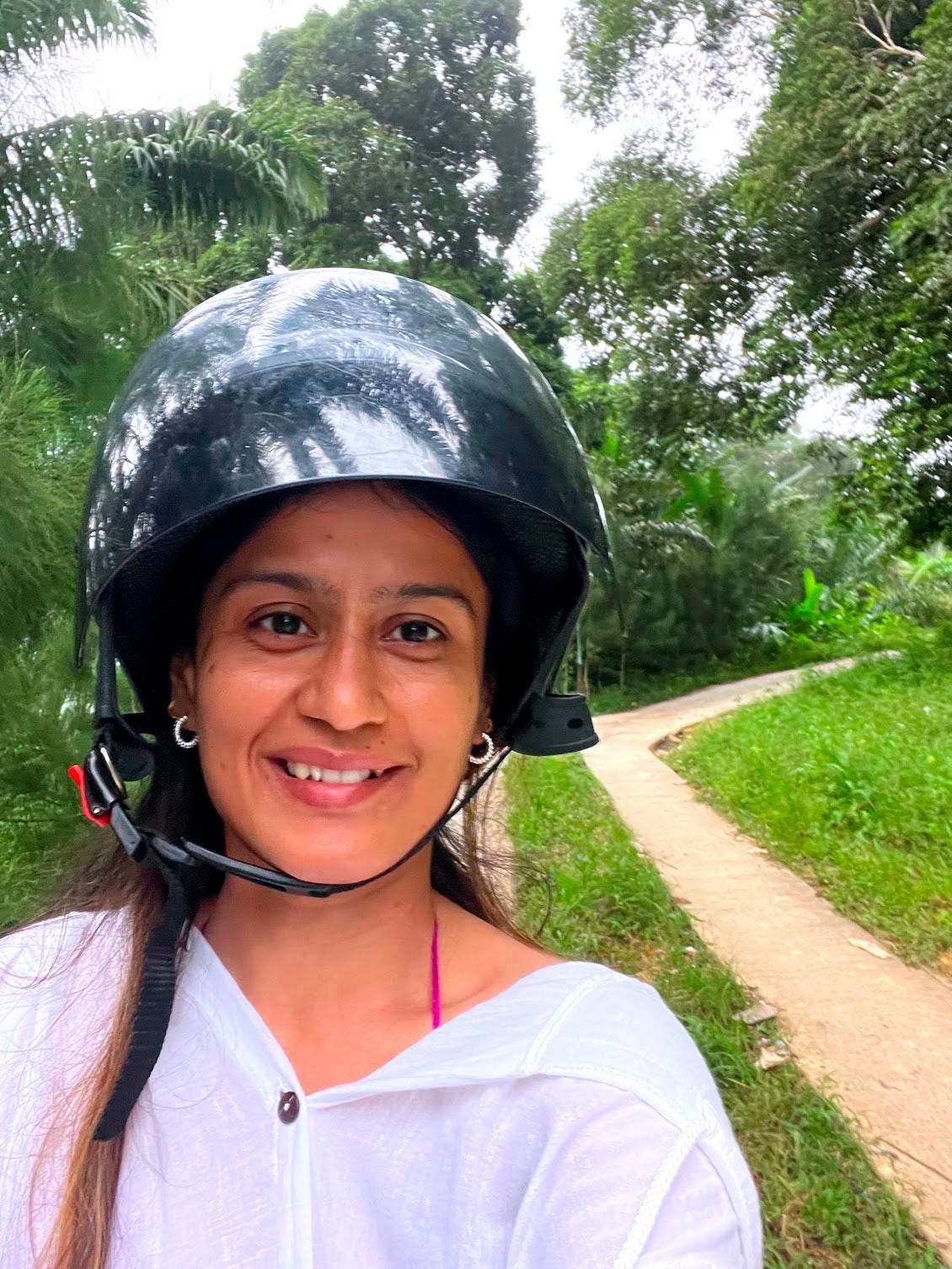
I took this as my cue to head down. Nobody warns you about the real difficulty of solo biking in the rain, checking your phone for directions roughly 1457 times, since most bikes don’t come with a holder, and mine stayed in my pocket, cutting my glances down to a quarter of usual.
Being the most impatient version of myself exactly when I needed to be the most patient, I decided to rely on memory instead, a fun game I play that’s believed to strengthen brain muscles, though I don’t recommend it to anyone.
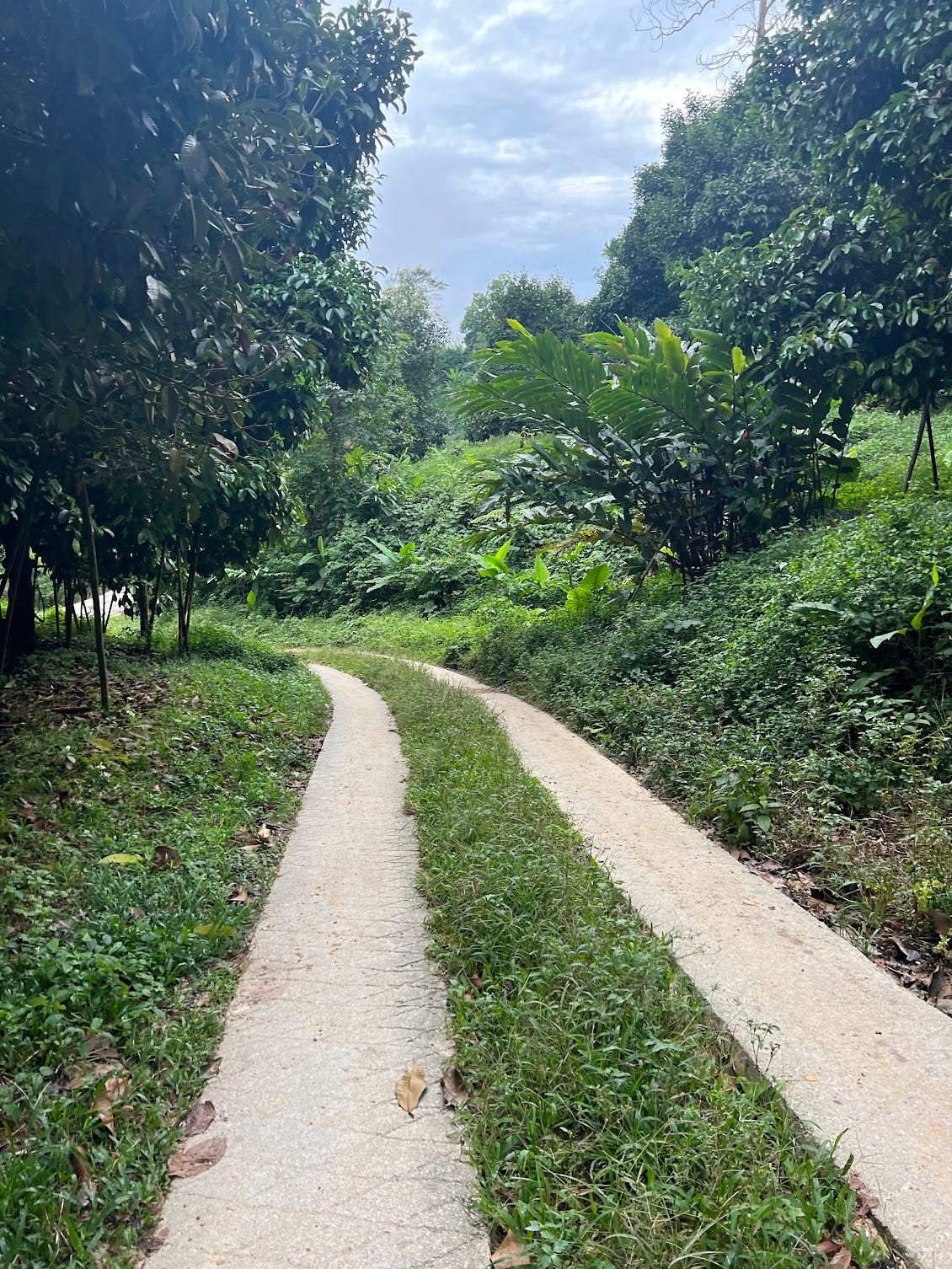
I checked the map once more, bang on route, memorised a couple of turns ahead, found a tree dry enough for one last look, and set off with the kind of confidence that had already crossed into overconfidence without my noticing.
I’d gotten the first few turns right, buoyed by rising confidence, the rain, a nearing sunset, and my own hurry to catch the golden hour, all of which combined into the evening that remains my biggest getting-lost story in eleven years of solo travel.
Twenty minutes in, my brain started asking questions it should have asked sooner: why do we still appear to be up the hill? Why do these houses look smaller than they should? I ignored a few more before finally pulling over.
It was getting dark. The sun had gone home. There wasn’t a soul around, and the tiny dot on my map, running on GPS alone, showed that my memory game was wrong. Just fifteen to twenty minutes of not looking at the map had somehow undone forty-five minutes of driving. The logic simply did not add up.
This is, I should mention, a pattern with me and blue dots generally: Google Maps will happily show my destination behind me while I keep walking away from it, convinced the GPS just needs a moment to settle, and that night the dot and I were having exactly that argument at the worst possible time.
Trying to correct course, phone glued to my hand, rain going romantic on my cheeks, I somehow drove even deeper onto a side road, damp, muddy, closing in with trees, still climbing when I badly needed it to be doing the opposite. My bike gave in before I could fathom it, wheels smeared in red mud, refusing to move.
I checked my feet, also swamped in mud, and used the flashlight to see what was ahead, my first genuinely scared moment: the road climbing instead of descending, loud insects instead of street lights, and a fuel gauge doing arithmetic I didn’t want, based on some crude cave-type calculations, about an hour left.
The engine roared. The wheels did not move an inch.
I sat there running through my options. Walk and find someone? Wait out the rain? Manually haul the bike free, which I tried, and which was ridiculous, mostly for reminding me I am, structurally, just a little woman.
(Solo travel didn’t make me brave. It exposed me - this was one of those exposing moments.)
I spent ten minutes zooming in on the map, the dot appearing to laugh at me, seriously weighing whether to leave the bike and walk back toward the blue line - a lot of distance, but hey, survival instinct, thanks.
And then, out of nowhere, a middle-aged Thai couple appeared behind me. I could not believe my eyes; I thought at first I was hallucinating, having not seen a human soul in three hours besides three boys at the temple.
I shone my flashlight at them frantically, rude, but I had to confirm they were living humans. The woman lifted her hand to shield her eyes, and once it sank in, they came closer and asked in Thai if I needed help, the man pointing at my wheels. I have never accepted help faster in my life.
(Strangers, it turns out, keep proving my own theory that some people are only meant for one night, or one hour, of your life - and that’s still enough.)
I explained my situation fluently in English to his wife, who stood there smiling, patiently listening, understanding not one word, and replied in Thai with something positive, pointing to her husband.
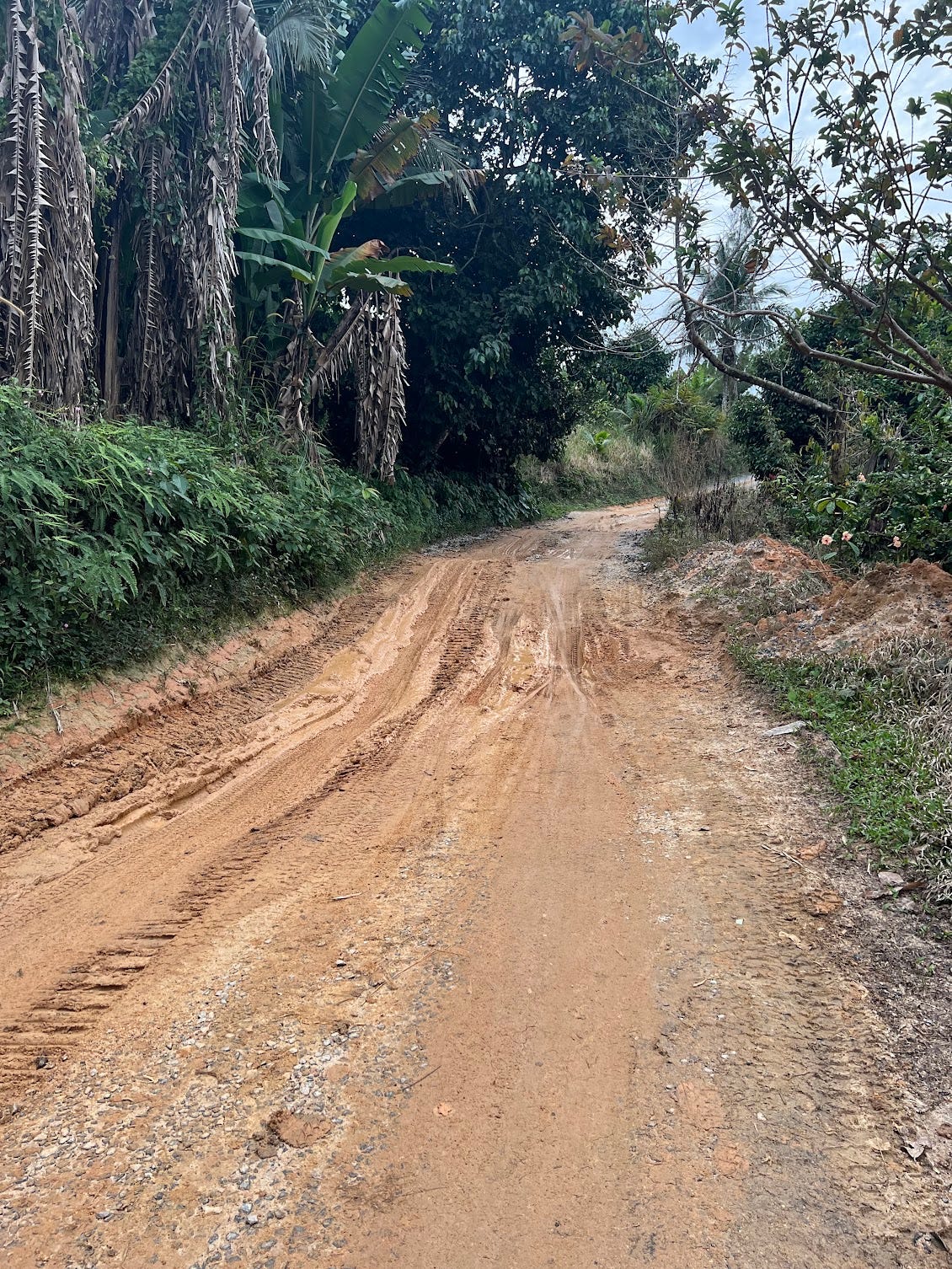
He hauled the bike out of the mud and up the hill, told me which way to go in Thai, and I have never listened this hard to anything in my life, memorising his hand gestures, the correct series of rights and wrongs.
“All good, all okay,” the couple kept repeating with reassuring smiles, and after thanking them more times than was strictly necessary, I got back on the bike.
I made it down, hyper-aware of every move, phone dying, fuel gauge past reasonable, cold wind sweeping my sweaty face, until the island’s lights finally appeared. I stopped at the first petrol pump, then treated myself to every goody in the 7-Eleven fridge next door. I’d earned it.
To this day, I couldn’t tell you what actually went wrong: the rain, the dark, or the chirping insects loud enough to remind my ape brain that I was the only mammal out there without company.
The fine art of not recognising my own front door
And then there was the hotel. Not a city. Not a country I didn’t know. A single hotel, four nights, and I still couldn’t find my own room without the paper map from the front desk, folded in my back pocket like a security blanket.
On night three, I walked confidently into what I believed was the ice machine alcove and instead let myself directly into a stranger’s open door, because in my defence the numbers on that floor made no logical sense, and less in my defence, I hadn’t actually checked before turning the handle. The man inside was very kind about it. I have never moved faster while apologising that slowly.
The number of times I’ve lost my way back to hostels in Poland is beyond what I can accept. I’d pretended for years none of this ever happened, until these memories came flooding back the moment I started writing this post. Yay for me.
(Turns out this is a running theme; I’ve already written about the other things I lie to myself about before every trip, and apparently that list extends to after the trip too.)
One time in Krakow was a double whammy.
(Between getting lost, I did find time for free things to do in Krakow, which is more than this section is about to suggest.)
First I boarded the wrong tram, phone dead after a thousand pics and ten hours out. My saviour, guarded with gloved fingers, was the good old paper map of the city, collected purely because I love maps in every size, shape and form. It earned its keep that night and got me home, nearly three hours late to my bunk bed.
After the getting-down-walking-finding-out-oops-not-this-station routine, hopping onto another tram in the cold night like a deluded woman, checking the map in a circus that felt like gym reps, I finally landed in the right neighbourhood, standing right in front of the immaculate sign confirming it.
In my frustration at the tram-hopping going well past the point of being funny, I skipped the due diligence of actually checking the lane on that tinily written map.
I’m especially talented at walking past the place I’m trying to find, and guesthouses don’t help, hiding their names behind trees, scooters, and electrical wires, the online photos showing a wide entrance in flattering afternoon light that turns out to be one narrow door between a pharmacy and a shop selling plastic buckets.
I pass it, check the map, walk back, pass it again, and begin to suspect the accommodation exists mainly as an idea.
By the third round, someone from reception recognises the confused woman circling the building with a backpack, probably impressed that I managed to miss an entire building from a distance of six metres.
The night a stranger’s face judged me more than her mouth did
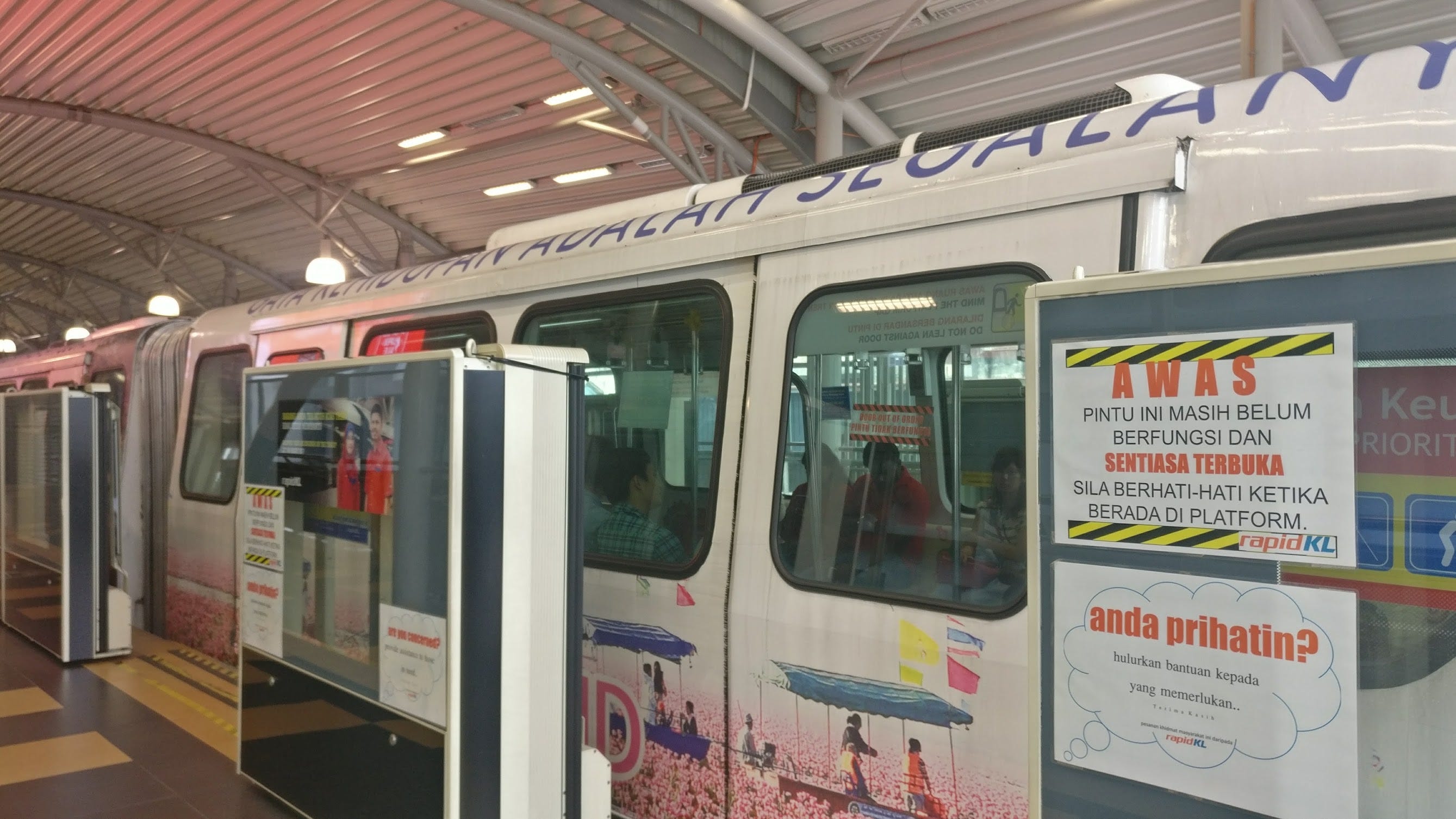
Railway and metro stations offer more ambitious ways to lose myself: multiple exits, underground passages, signs that look helpful right up until you follow them. This happened in Manila.
There’s a whole separate post about the free things to do in Manila that don’t involve public transit humiliation. This is not that post.
Heading back to my hostel after a day trip, I caught a metro, obviously in the wrong direction. The problem wasn’t the wrong direction; it was how long it took me to notice.
The train was packed, so crowded you couldn’t move a body part once assigned your standing spot, one hand on my day pack, the other on the handle above me. The scenery changed fast, markets, bridges, skyscrapers, neon, flashing past like something out of a Studio Ghibli movie, and for the first thirty minutes and ten stations, I let myself feel like the girl in it.
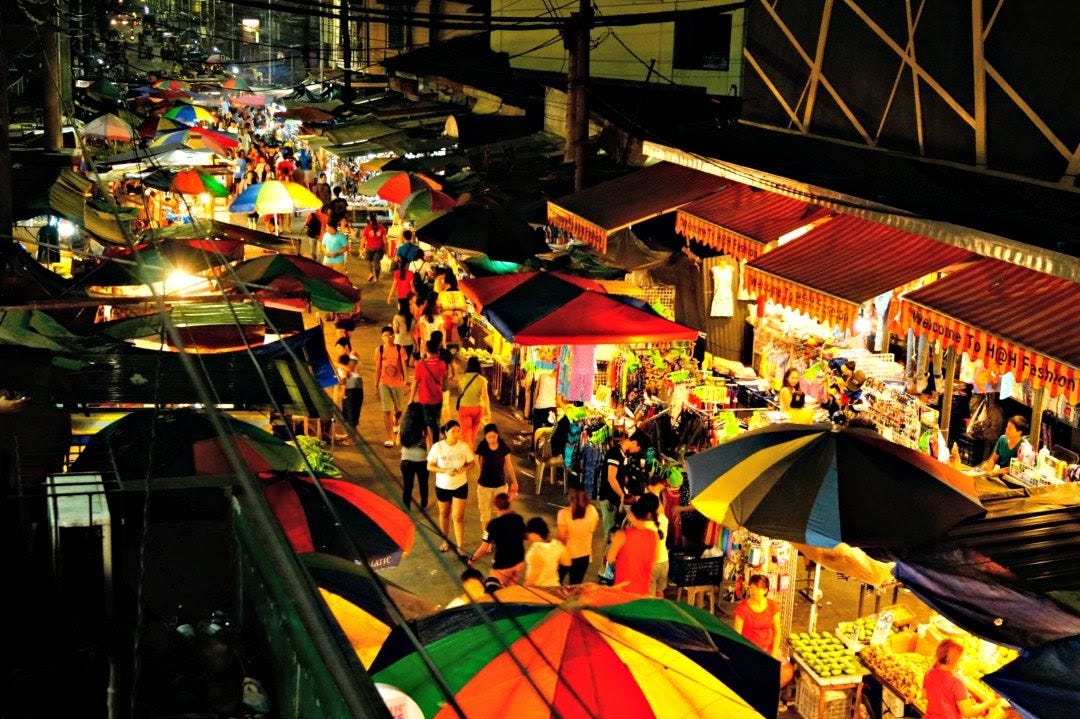
I stopped feeling like her gradually: skyscrapers thinning out first, then neon giving way to empty sky, then people settling into their phones with the specific stillness of someone done for the day, heading home, station very far away. The frenzy had reduced enough, in fact, that I could finally move my limbs without touching another human.
Just to be sure, I asked the man next to me the station name. He looked perplexed, as if he’d never heard it, the kind of look that questioned whether I was even naming a place in the Philippines or just reciting something from my own country. He mumbled something, probably a swear, so I tried a woman nearby. Same result, more diplomatically delivered.
This went on for a few minutes, my own voice apparently rising enough to be heard at the far end of the carriage, until someone across shouted, “Wrong train! You get out!”
Imagine being alone in a new country, in a packed night train, trying to speak in languages neither of you understand, and a stranger pointing out your mistake with real gumption.
“Okay, I get out now? I go where?” I shouted back, my own English breaking under pressure. “Yes, next, get down. Go 2,” came the reply. All I understood was that I had to get my ass out of the train, immediately.
I got off at the next station, thanked the voice in the void, and when I mentioned the name to two men on the platform, one let out a deep belly laugh; the other looked so horrified it was as if I’d asked him for one of his kidneys.
My attention went to the horrified one, who said simply, “Very far.” My phone had died, my power bank had run its course, and all I had was a hostel business card with a tiny metro map on the back. Between the horrified face and the high-decibel laugh, I calculated on the spot that very far was really very far indeed.
They pointed to the stairs, “Go there, ticket,” and, with particular urgency, “now!” At the ticket counter, a woman who spoke a little English took my money and said, without changing expression once, “You have come to a different city. That station is two and a half hours away.”
Her stoic face was just a facade; her eyes told me everything she thought of me. I’ll never forget that look. Ever.
I bring this up because somewhere in the last few years I became, unofficially, the person strangers stop and ask for directions when I’m the one travelling alone in a foreign city. Someone will stop me on a street I arrived at eleven minutes earlier and ask, with total confidence in my competence, which way the station is.
And here’s the part I’m not proud of: I usually just point somewhere. Anywhere. With conviction. And most of the time, I am also not giving them accurate directions. Being lost and looking lost, I’ve come to understand, are two entirely different skills, and I have only ever gotten good at one of them.
(It’s a bit like what I no longer tolerate on the road - I’ve stopped apologising for the confidence, even when it’s completely unearned.)
A brief, ongoing study in misplaced trust
Bus stations are more chaotic still; nobody is ever waiting at the platform written on the ticket. I ask someone, they point somewhere; I ask another, they point back to where I’ve just left. In India, this reaches its purest form.
“Turn right after the old petrol pump.”
“Is the petrol pump still there?”
“No, no. It closed.”
Naturally.
My other method is to follow somebody who looks confident, a person carrying a suitcase leaving the station at speed. I follow them through two corridors and a car park, only to watch them climb into a private car where their family is waiting, and have to keep walking past the reunion, pretending I’d always wanted to inspect that corner of the car park.
Vienna, Thailand, Krakow, Manila. Four countries, one incredibly consistent skill set, and, if I’m honest, at least two more stories I haven’t found the nerve to write about yet.
If you’ve got one of your own, the ones you’ve spent years pretending not to remember, tell me in the comments. I’ll trade you a story for it.